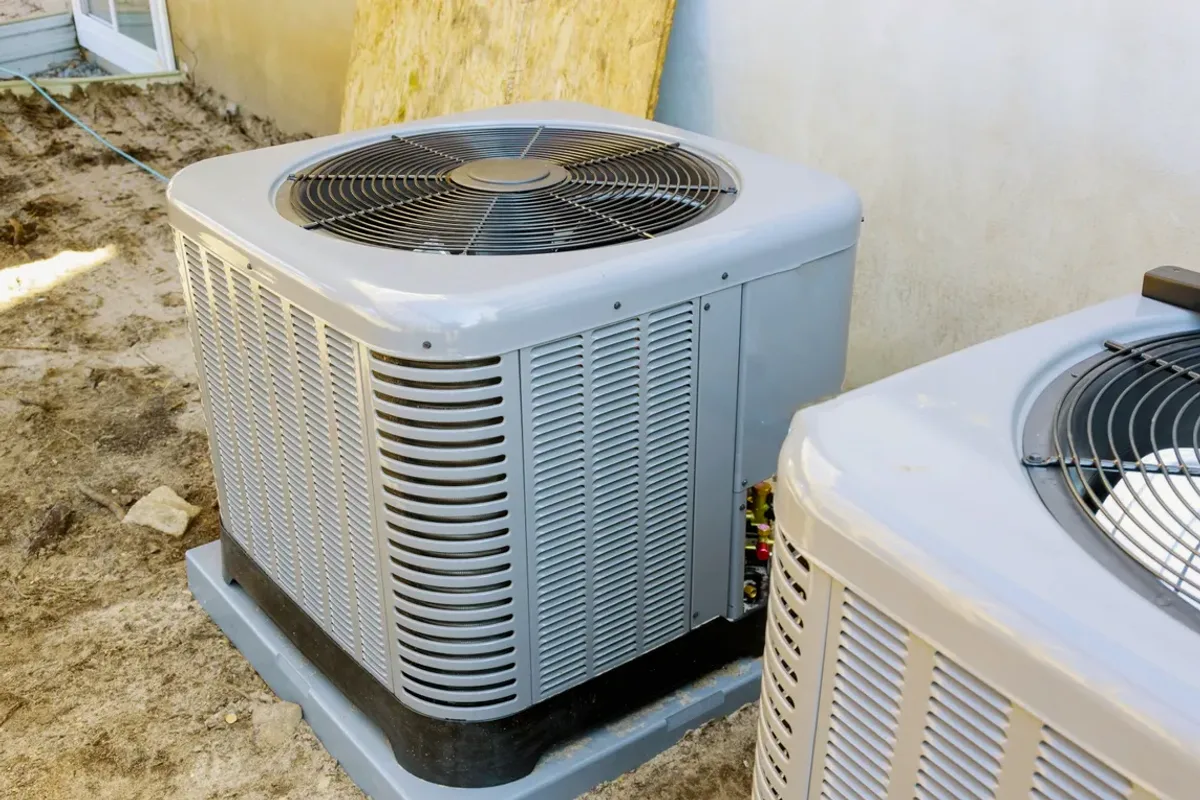
Is warm air coming from every outlet or only from one area or ductless indoor unit?
An air conditioner that blows warm air, will not start, cools unevenly, or makes a new noise may have an airflow, control, electrical, or refrigerant-circuit fault. The system type matters: central air relies on duct distribution, while a ductless unit serves rooms through indoor heads. Describe which areas are affected and whether the problem is continuous or intermittent. That information helps distinguish a repairable component issue from a broader system condition that may warrant comparing repair and replacement options.
Assessment should identify whether the system is central or ductless, then compare the affected areas, airflow, controls, and operating symptoms. A refrigerant concern requires professional diagnosis rather than an assumed top-up, since a leak and its underlying cause need evaluation. Equipment age, repair history, and the nature of the fault help determine whether repair or replacement should be considered.
Central-air and ductless AC repair
Airflow, controls, electrical components, and refrigerant diagnosis
Repair versus replacement decisions
Assessment and Scope
Questions for the Proposed Work
01
Trace warm air to its source
Warm air can result from restricted airflow, a control or electrical fault, or a problem in the refrigerant circuit. On central air, the affected rooms and duct airflow help show whether the issue is system-wide or distribution-related. With ductless equipment, compare the indoor heads and their operating indications. These comparisons prevent an airflow complaint from being treated automatically as a refrigerant fault, which requires a separate professional inspection.
02
Evaluate refrigerant and component faults
Capacitors, contactors, control boards, and refrigerant-circuit problems require different diagnostic steps. If cooling has weakened gradually, the inspection may need to determine whether a leak is present and locate its source before repair options are considered. Refrigerant handling and internal electrical work are not occupant tasks. A record of prior repairs and the system model can help establish whether a specific component can be repaired or whether the equipment's broader condition changes the decision.
03
Compare repair with replacement on evidence
Repair may be reasonable when a defined component fault is found and the rest of the system remains serviceable. Replacement becomes a separate option when major components, repeated failures, or the overall condition make another repair difficult to justify. Compare the diagnosis, equipment age, and repair history rather than assuming an older unit must be replaced. Maintenance findings should be based on inspection and manufacturer guidance, not a blanket service schedule.
Compare the next step
Agree on the sequence for any cooling-line, drain, coil, or outdoor-unit changes. Ask what testing must happen before routes are concealed and what access remains afterward. State who restores walls or landscaping and when the system can return to service as other renovation trades finish their work.
Do not open electrical panels or handle refrigerant. If ice, water near electrical equipment, or abnormal operation is present, stop using the affected system and request an assessment.