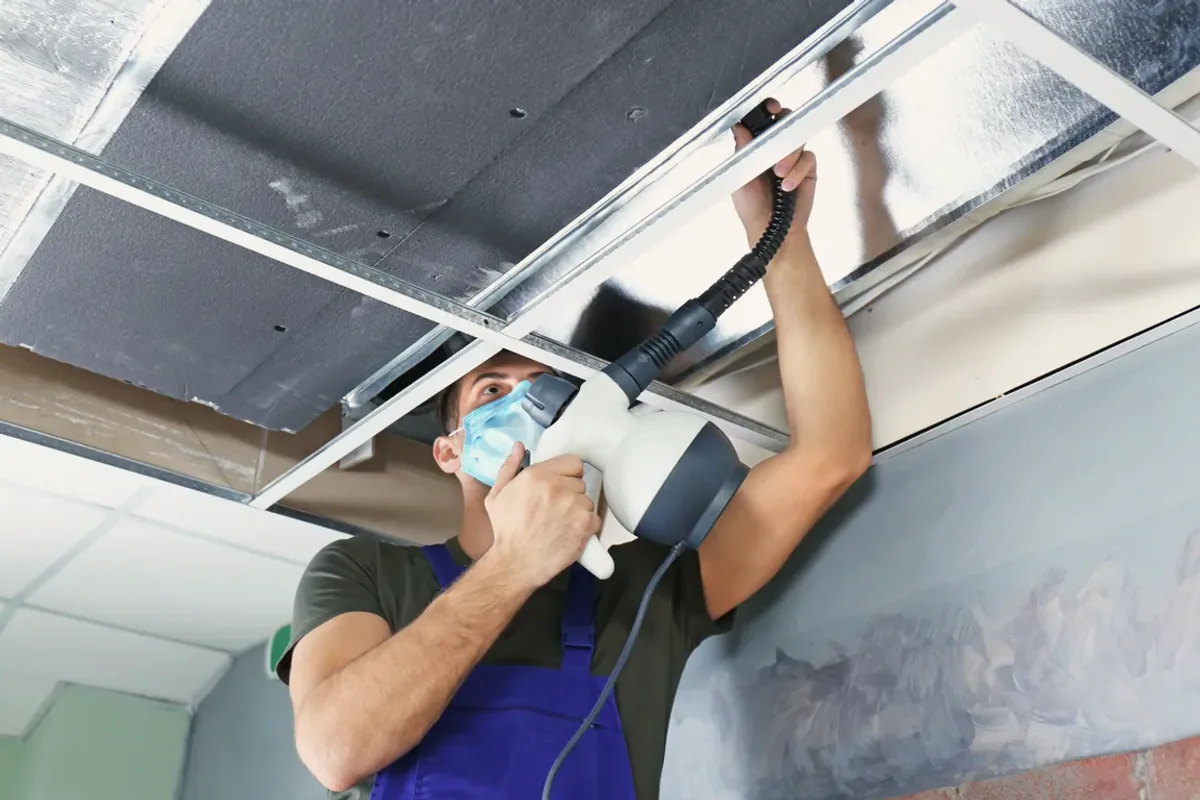
Request duct cleaning for a property in Leamington. Include the equipment, the problem or planned work, and your location so the request can be reviewed.
What prompted the request, and is there visible debris, renovation dust, or a known problem inside the ductwork?
Duct cleaning is a targeted service for ductwork where inspection identifies accumulated debris or a particular source of contamination, such as dust from renovation. Visible material at a grille alone does not establish the condition of the full duct system or show that cleaning will resolve weak airflow. Duct size, access, system layout, and the location of the material define the work. If duct sections are damaged, corroded, or disconnected, those conditions need separate assessment rather than being treated as cleaning.
Assessment should establish where debris is present, how the ductwork can be accessed, and whether the concern is contamination, restricted airflow, or physical damage. Construction dust may justify focused inspection after renovation, while weak airflow can have causes outside the ducts. This distinction matters because cleaning cannot reconnect a separated duct or correct a system fault. Findings should determine whether cleaning, duct repair, or another diagnosis is relevant.
Inspection and targeted HVAC duct cleaning
Renovation dust and debris concerns
Damaged, corroded, or disconnected ductwork
Assessment and Scope
Questions for the Proposed Work
01
Use inspection findings to define cleaning
Duct cleaning should respond to observed conditions rather than an automatic seasonal or yearly interval. Inspection can identify the affected sections, the type and extent of debris, and whether access is practical. Dust on a return grille does not by itself show that all supply ducts require cleaning. Defining the affected area helps set an appropriate scope and keeps the work tied to the reported issue instead of making broad claims about air quality or system performance.
02
Treat renovation dust as a specific case
After renovation, fine construction debris may enter nearby returns or ducts, particularly if the system operated while work was underway. The relevant questions are which areas were exposed, whether visible material is present inside the ductwork, and whether the system's filter or other components also need inspection. Those observations guide a targeted cleaning decision. They do not establish that every duct requires service or that cleaning will remove all indoor dust.
03
Separate duct damage from debris removal
Corroded, crushed, or disconnected duct sections are repair concerns, not cleaning tasks. A visual inspection of accessible ductwork can help distinguish a blockage or debris from a leak or separation that affects air delivery. If damage is found, repair scope should be considered separately from any cleaning. The equipment type and duct layout also affect access and the work method, while manufacturer instructions guide any related inspection of the connected HVAC equipment.
Compare the next step
Agree on dust protection before the renovation starts and inspect after the work that could contaminate the system. Ask whether cleaning is justified and which components are affected. Schedule any cleaning and filter attention after dust-producing work so the final condition can be recorded meaningfully.
Routine cleaning is not automatically necessary and does not guarantee health or energy benefits. Resolve moisture sources and assess damaged materials rather than treating cleaning as the only remedy.