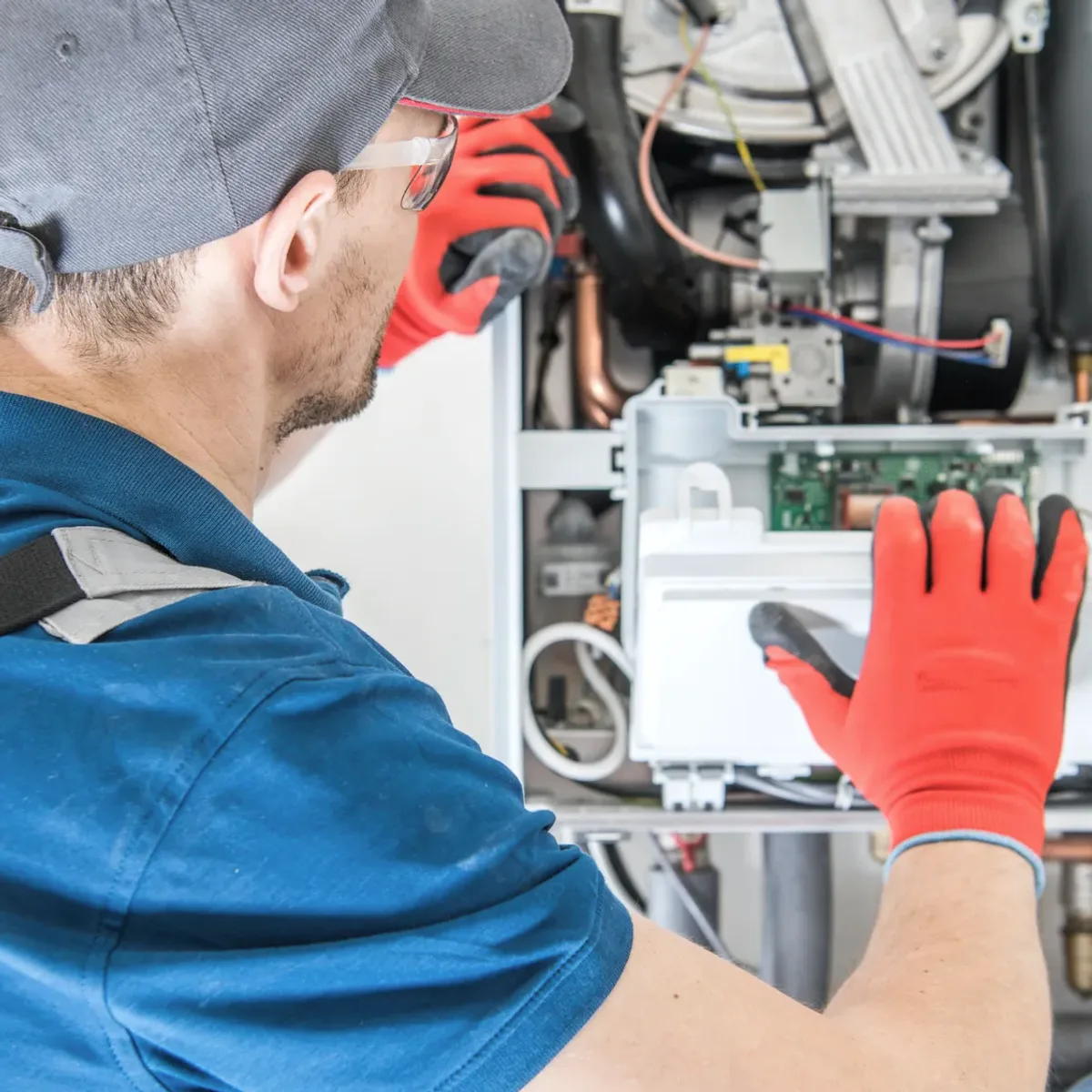
For a boiler repair request in Leamington, distinguish a boiler that will not fire from one that runs while radiators or in-floor loops stay cold. Record the fuel, model, visible pressure indication and any leak location. Ignition, circulation and pressure-loss concerns require different assessment; boiler replacement and routine maintenance have separate scope questions below.
Does the boiler fail to fire, lose pressure, leak, or heat radiators or in-floor loops unevenly?
Boiler service can involve a no-heat repair, replacement planning, or maintenance based on the boiler model and inspection findings. Fuel type matters, as do the differences between natural-draft cast-iron boilers serving radiators and condensing boilers connected to radiators or in-floor loops. Ignition faults, circulator problems, pressure loss, leaks, and venting concerns point to different work. Describe the fuel, distribution system, and observed symptoms so the service request identifies the relevant boiler scope.
Assessment should identify fuel, boiler design, venting arrangement, and whether heat is distributed through radiators or in-floor loops. A no-fire condition differs from a failed circulator or a system leak, and repeated pressure loss needs its source investigated. For replacement, the existing distribution temperatures and venting constraints matter. Maintenance should follow the model's instructions and inspection findings; flushing is not automatic for every hydronic system.
Gas, propane, and oil boiler repair and maintenance
Natural-draft cast-iron and condensing boiler distinctions
Radiator and in-floor hydronic system installation planning
Assessment and Scope
Questions for the Proposed Work
01
Distinguish ignition, circulation, and pressure faults
A boiler that will not fire may have an ignition, burner, or control fault, while a running boiler with cold radiators may point toward circulation or distribution. Pressure loss can result from a leak at a pipe, fitting, radiator, or other system component and should be traced rather than repeatedly corrected without diagnosis. The fuel and model help define the inspection. Occupants should not adjust fuel, combustion, pressure controls, or safety devices.
02
Match replacement to boiler and heat distribution
A natural-draft cast-iron boiler serving radiators has different venting and operating characteristics from a condensing boiler connected to radiators or in-floor loops. Replacement planning should compare the existing distribution, required water temperatures, boiler condition, and available vent route with the proposed equipment. Fuel type also affects appliance requirements. A replacement should not be chosen solely by the old boiler's nameplate or by assuming every hydronic system suits the same condensing design.
03
Base maintenance on the model and findings
Maintenance may include inspection of burners, controls, venting, and system pressure, but the appropriate tasks depend on the boiler design and manufacturer instructions. A system flush should not be automatic; inspection findings and the hydronic circuit determine whether that work is relevant. Natural-draft and condensing equipment have different venting considerations, and oil, propane, and gas appliances have distinct fuel components. Documented service history can clarify recurring faults and inform future repair or replacement decisions.
Compare the next step
Coordinate hydronic piping, emitter locations, and controls before walls or floors conceal the routes. Ask which installation checks happen before enclosure and who protects operating equipment while other trades work. Keep service points accessible and obtain an updated zone record after construction so later repairs can refer to the finished system.
Leave fuel, combustion, electrical, and pressure-system work to a qualified contractor. Do not adjust safety devices or repeatedly add water to a system with an unexplained leak or pressure loss.